
Struggling to rank for multiple keywords and dominate Google search results? You’re not alone. Many websites fail because they focus only on individual keywords instead of building topical authority.
That’s where topical map expert Ben Stace comes in. His approach to topical mapping and semantic SEO has transformed content strategies for businesses worldwide.
In this guide, we’ll uncover why Ben Stace is an expert in topical maps, show his step-by-step strategies, highlight common mistakes, and give real examples to help you implement his methods effectively.
What Is a Topical Map Expert Ben Stace?

A topical map expert Ben Stace is a leading authority in semantic SEO and content architecture. Unlike traditional SEO specialists who focus mainly on individual keywords, Topical Map Expert Ben Stace builds topical maps structured blueprints that organize content around main topics, subtopics, and related entities.
By creating these maps, he helps websites:
- Establish topical authority in their niche
- Improve internal linking and content hierarchy
- Cover all relevant user intents and search queries
- Avoid keyword cannibalization and content gaps
Ben Stace’s expertise lies in connecting topics semantically, using topic clusters, pillar pages, and entity-based SEO to make websites more authoritative and discoverable by Google. His strategies ensure that search engines view a site not as isolated pages, but as a comprehensive source of information on an entire subject.
Who Is Ben Stace and Why He’s a Topical Map Expert
Ben Stace is a renowned SEO expert specializing in topical mapping and semantic SEO. He’s recognized for helping websites:
- Build topical authority across entire niches
- Organize pillar pages and cluster content effectively
- Optimize internal linking and content hierarchies
He focuses on entity-based SEO, knowledge graphs, and semantic search to signal authority to Google. Unlike traditional keyword-focused strategies, Stace builds content silos that improve crawlability, topical relevance, and E-E-A-T signals.
What Is a Topical Map and Why It Matters for SEO
A topical map is a structured blueprint showing the main topic, subtopics, and semantic relationships between content pieces. It helps:
- Cover all areas of a niche (topical coverage)
- Establish topical authority in Google’s eyes
- Improve user experience with organized navigation
- Support content optimization and link equity flow
Unlike simple keyword clusters, Topical Map Expert Ben Stace’s topical maps integrate entities, semantic relevance, and user intent mapping, aligning content with algorithms like BERT and MUM.
Step-by-Step Guide to Building Topical Map Expert Ben Stace
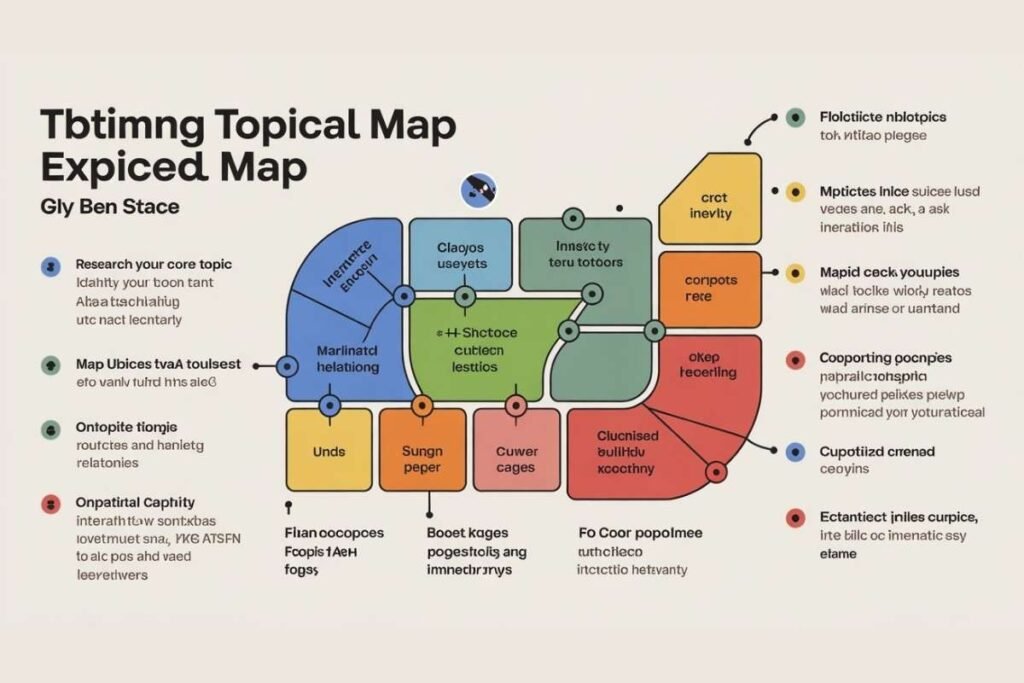
Here’s a practical roadmap for implementing Topical Map Expert Ben Stace-style topical maps:
Research Your Core Topic
- Identify your main topic and target user intent
- Analyze competitors and SERP features
- Use tools like Ahrefs, SEMrush, or MarketMuse for keyword clusters
Map Subtopics and Entities
- List 8–12 subtopics with semantic relationships
- Include entities such as concepts, people, products, or locations
- Align each subtopic with user queries and LSI keywords
Build the Topical Hierarchy
- Create pillar pages for main topics
- Organize spoke content (cluster pages) under each pillar
- Plan internal links to strengthen authority flow
Content Creation
- Write intent-focused content
- Integrate LSI keywords, skip grams, and co-occurring terms
- Optimize for featured snippets, People Also Ask, and semantic relevance
Optimization & Schema
- Implement structured data and FAQ schema
- Optimize anchor text and internal linking
- Maintain topical depth and cover content gaps
Monitor and Update
- Track rankings and SERP visibility
- Refresh content to maintain authority links and topical relevance
- Expand map as your niche evolves
Common Mistakes to Avoid in Topical Mapping
Even experts make mistakes. Avoid these:
- Publishing isolated blog posts without connection
- Ignoring semantic relationships between subtopics
- Overcrowding content with keywords instead of intent
- Skipping internal linking and silo structure
- Failing to refresh content to maintain authority
Expert Tips for Maximum SEO Impact
- Focus on topic clusters rather than single keywords
- Use entity-based SEO to improve semantic relevance
- Monitor topical trust flow with analytics tools
- Leverage content silos and pillar pages strategically
- Integrate schema markup to help Google interpret content
Real Examples of Ben Stace’s Topical Map Strategies
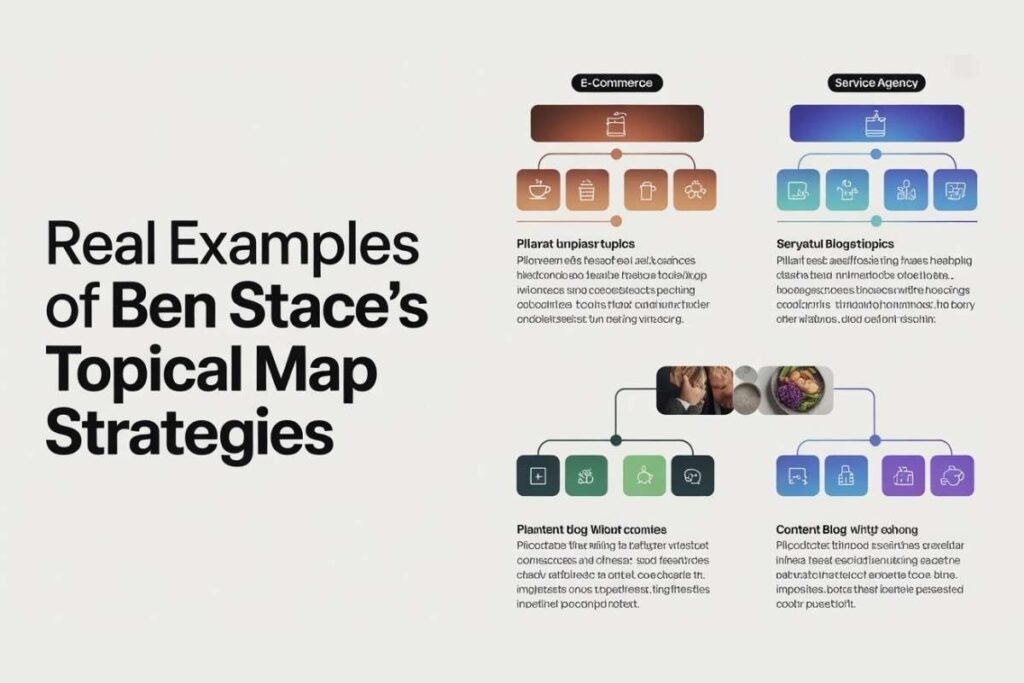
Example 1: E-Commerce Site
Pillar: Complete Guide to Specialty Coffee
Clusters: Brewing Methods | Coffee Bean Types | Equipment Reviews | Coffee Flavor Profiles | Sustainability Practices
Example 2: Service Agency
Pillar: Digital Marketing Strategies
Clusters: SEO Techniques | Content Marketing | PPC Ads | Local SEO | Analytics Tools
Example 3: Content/Blog
Pillar: Holistic Wellness Guide
Clusters: Nutrition & Diet | Mental Health | Fitness Routines | Sleep Hygiene | Stress Management
These examples show how Topical Map Expert Ben Stace frameworks turn websites into authoritative references rather than scattered content pages.
Conclusion
Topical Map Expert Ben Stace approach to topical maps demonstrates that SEO success is about building comprehensive authority, not chasing individual keywords.
By connecting topics semantically, organizing content hierarchically, and focusing on user intent, his strategies make websites recognized as trusted sources by Google.
Implementing his methods ensures long-term visibility, stronger internal linking, and a content ecosystem that evolves with search trends.
FAQs
What makes Ben Stace different from traditional SEO experts?
He focuses on semantic SEO and topical authority rather than isolated keywords, using structured content maps to dominate niches.
How do topical maps improve search rankings?
They organize content around main topics and subtopics, signal authority to Google, and enhance internal linking and relevance.
What tools does Ben Stace use for topical mapping?
He uses tools like Ahrefs, SEMrush, MarketMuse, and AI-powered keyword research platforms to identify clusters and entities.
Can small websites benefit from topical maps?
Yes, even small sites can boost authority, avoid content gaps, and compete with larger websites by using strategic topical mapping.
How often should a topical map be updated?
Maps should be monitored continuously, refreshed with new content, and expanded as niches evolve or search intent changes.
What are common mistakes when building a topical map?
Ignoring semantic connections, overloading keywords, publishing disconnected posts, and skipping internal linking are frequent pitfalls.
How do pillar pages fit into Ben Stace’s strategy?
Pillar pages serve as the central hub for a topic, linking to cluster pages to distribute authority and improve crawlability.
Is topical mapping suitable for all industries?
Yes, from e-commerce to service agencies and blogs, structured topical maps work for any niche by organizing content semantically.