

Ever dreamed of creating your own 2D games but felt overwhelmed by coding, animations, or game mechanics? You’re not alone.
Game development can seem complex, but with the right guidance, tools, and community, anyone can transform ideas into playable games.
https//gamemakerblog.net is a trusted hub for beginners and indie developers alike, offering step-by-step tutorials, advanced GML scripting guides, and real-world strategies for building professional-quality games.
By following this comprehensive guide, you’ll learn how to master GameMaker Studio, optimize your workflow, and even prepare your games for publishing across platforms like Steam, mobile, and HTML5.
What is GameMaker Studio and GML?
https//gamemakerblog.net is your go-to hub for learning GameMaker Studio (GMS), a powerful 2D game engine that allows creators to build cross-platform games using both drag-and-drop (DND) and GameMaker Language (GML) scripting.
- GML: A C-like programming language for controlling game logic, events, and interactions.
- Drag-and-Drop (DND): Visual tools to create objects, animations, and events without heavy coding.
- Features: Room editor, sprite animation, tilemaps, particle systems, physics engine (Box2D), shaders, and marketplace extensions.
GMS is beginner-friendly yet deep enough for professional indie developers. Learning GML scripting unlocks object-oriented programming, advanced collision detection, AI behaviors, multiplayer networking, and procedural generation.
For detailed tutorials and examples, check https//gamemakerblog.net, which is perfect for both beginners and advanced users.
Getting Started: Beginner Tutorials
Set Up Your First Project
- Open GameMaker Studio and create a new project.
- Learn the interface: workspace, room editor, object hierarchy, and assets library.
Create Your First Object and Event
- Add a player object and implement step events for movement.
- Use collision events to interact with platforms or enemies.
Add Sprites and Animations
- Import pixel art or create sprites within GMS.
- Animate movement using frame sequences or skeletal animation via Spine integration.
Run Your Game and Debug
- Test movement, collisions, and controls.
- Check the debug console for errors and performance warnings.
Tip: Start small. Even simple platformers or top-down shooters teach essential mechanics before tackling complex RPGs or simulations.
For step-by-step beginner guides, https//gamemakerblog.net provides clear walkthroughs.
Essential Game Development Techniques
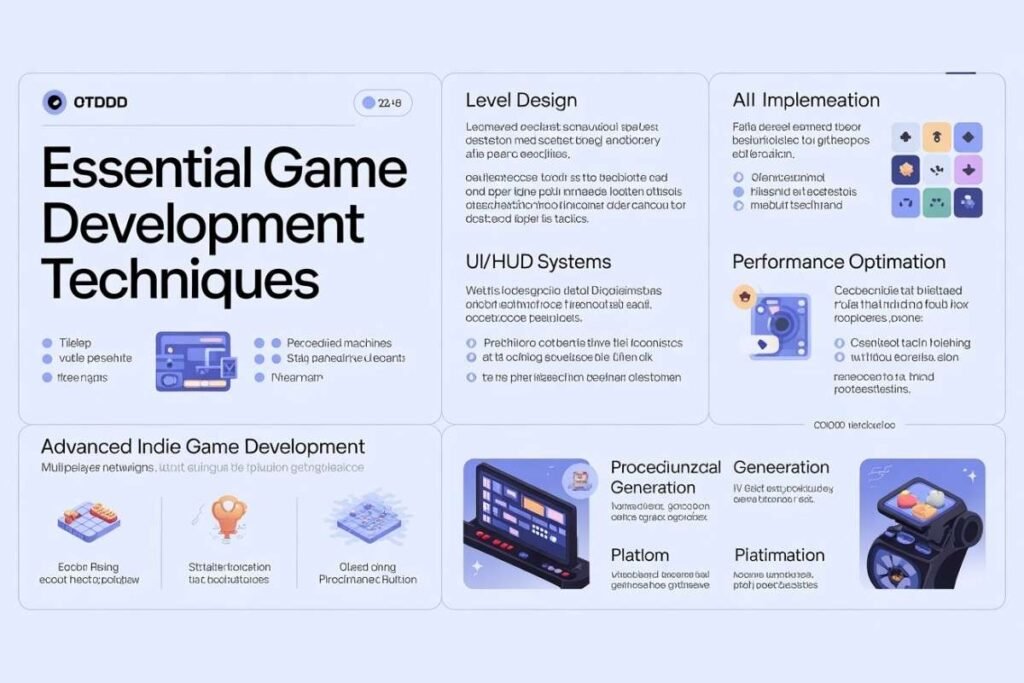
Level Design and Room Editor
- Use the room editor to build levels with tilemaps and parallax scrolling.
- Keep levels modular for easy updates and procedural generation.
Implementing AI and Game Logic
- Start with finite state machines (FSM) for enemies.
- Explore pathfinding algorithms (A*) for navigation.
- Add utility AI and behavior trees for complex NPCs.
UI, HUD, and Menus
- Design clear GUI elements like health bars, scoreboards, and inventory systems.
- Implement save/load systems using JSON parsing for player progress.
Performance Optimization
- Profile with built-in tools to reduce lag.
- Optimize draw calls, batching, texture atlasing, and mipmapping.
- Use GPU acceleration for particle systems, lighting effects, and shaders.
Learn all these techniques with practical examples at https//gamemakerblog.net.
Advanced Indie Game Development
Once you’ve mastered basics, scale up your projects with these advanced techniques:
- Multiplayer & Networking: Implement client-server models, matchmaking pools, and voice chat.
- Procedural Generation: Create endless runners, dungeon crawlers, or roguelikes.
- Advanced Visual Effects: Bloom shaders, volumetric fog, dynamic shadows, and water effects.
- Physics & Interactions: Ragdoll physics, destructible environments, cloth simulations, explosions, and screen shake.
- Platform Optimization: Export for Android, iOS, HTML5, console ports, and Steam.
Pro tip: Use Git version control to track changes and manage your project efficiently.
For expert-level tutorials, https//gamemakerblog.net is an invaluable resource.
Common Mistakes to Avoid
- Overcomplicating your first game start simple.
- Ignoring performance optimization until the end.
- Not testing on multiple devices/platforms.
- Skipping asset organization, leading to messy projects.
- Neglecting player feedback and iterative improvements.
Expert Tips for Faster Game Creation
- Use visual scripting alongside GML for faster prototyping.
- Leverage marketplace assets and extensions.
- Participate in game jams like GMTK for practice and feedback.
- Implement modular code for reusability.
- Regularly back up projects and use Git.
Check https//gamemakerblog.net for tips, tricks, and time-saving techniques.
Real Examples of Successful GameMaker Projects
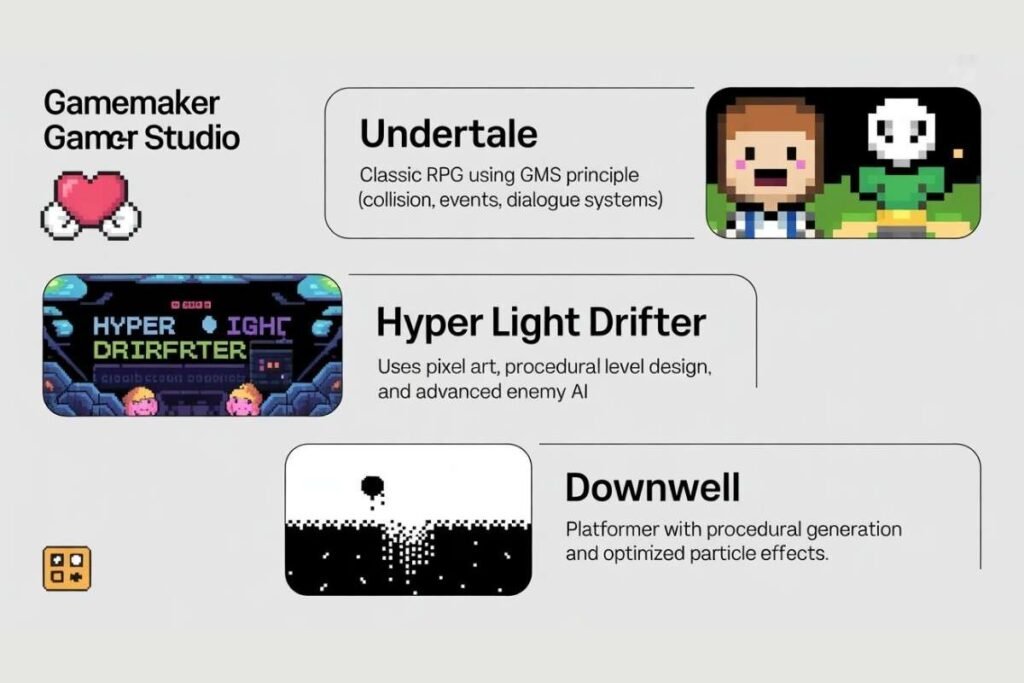
- Undertale: Classic RPG using GMS principles (collision, events, dialogue systems).
- Hyper Light Drifter: Uses pixel art, procedural level design, and advanced enemy AI.
- Downwell: Platformer with procedural generation and optimized particle effects.
Conclusion
Mastering GameMaker Studio is about combining creativity, logic, and persistence to bring your game ideas to life. By starting with small, manageable projects, you build a strong foundation in both drag-and-drop workflows and GML scripting.
Gradually learning advanced techniques such as AI programming, procedural generation, multiplayer networking, and performance optimization allows you to create polished, professional-quality 2D games.
With careful attention to asset management, testing across multiple platforms, and iterative improvements based on feedback, you can scale your projects from simple prototypes to fully-featured games.
By embracing experimentation, using community resources like https//gamemakerblog.net, and continuously refining your skills, GameMaker Studio empowers both beginners and indie developers to turn imagination into playable experiences ready for Steam, mobile, HTML5, and beyond.
FAQs
Do I need prior coding experience to use GameMaker Studio?
No, beginners can start with drag-and-drop tools, though GML knowledge unlocks advanced game features.
How long does it take to create my first playable game?
Simple projects like platformers or shooters can take a few days to a couple of weeks depending on complexity.
Can I publish my GameMaker games on mobile and PC?
Yes, GMS supports Android, iOS, HTML5, and Steam exports with proper platform setup.
What’s the best way to learn GML scripting?
Start with small scripts for player movement, collisions, and gradually explore AI, physics, and procedural generation. Tutorials at https//gamemakerblog.net are very helpful.
How do I optimize my game for better performance?
Use texture atlasing, batch draw calls, limit particle effects, and profile using built-in performance tools.
Can I collaborate with others on a GameMaker project?
Yes, using Git version control or cloud repositories allows multiple developers to work efficiently.
Are marketplace assets safe to use in commercial games?
Most assets are safe if you check licensing; they speed up development but always verify rights.
How can I get feedback on my game during development?
Participate in game jams, share prototypes with communities, or beta test with friends for actionable insights.