

Have you ever wondered how long is a hockey game While a standard professional match consists of three 20-minute periods, the real game time often stretches to two or more hours due to factors like ice conditions, player fatigue, penalties, and overtime.
The quality of the ice rink and surface friction affects puck movement, player speed, and stoppages, while sharper ice skates allow players to glide more efficiently.
Additional pauses from injuries, referee decisions, or slap shots and other game dynamics also add to the total duration.Even environmental elements such as ambient temperature or outdoor snow can influence the flow of play.
Understanding these aspects helps fans, players, and coaches plan strategies, manage energy, and enjoy the fast-paced action.From official ice hockey rules to real-time gameplay, knowing what affects game length ensures you never miss a moment of the action.
What Is the Standard Duration of a Hockey Game?
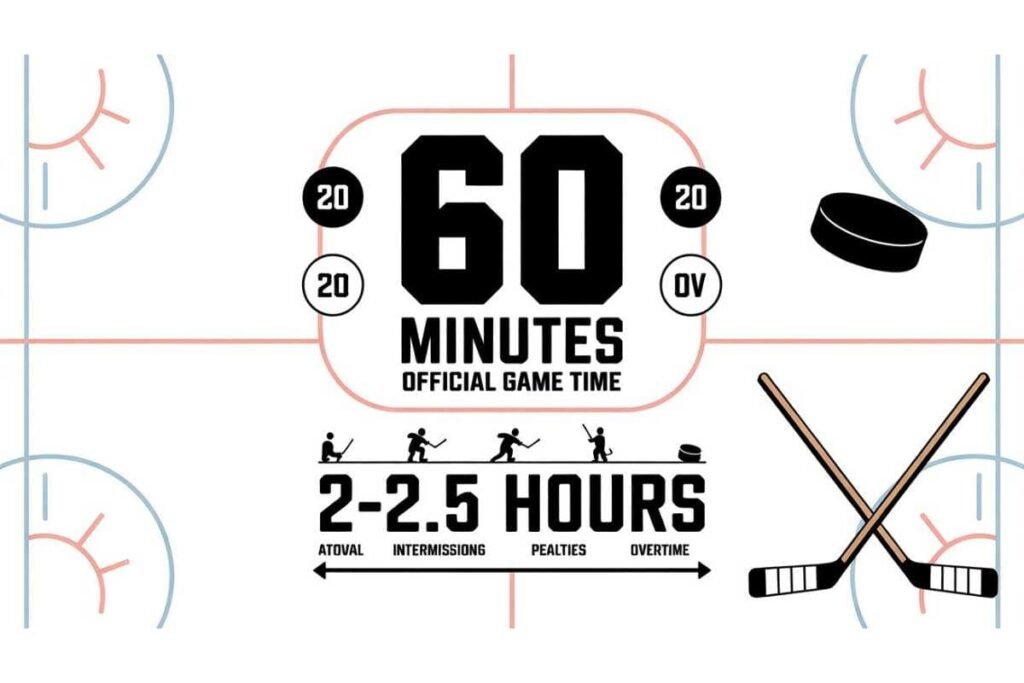
If you’ve ever asked, “how long is a hockey game?”, the answer goes beyond just the numbers on the clock.A typical professional hockey match features three 20-minute periods, totaling 60 minutes of official gameplay.
However, the actual time spent watching the game usually ranges from 2 to 2.5 hours due to stoppages, intermissions, penalties, and potential overtime.Various factors influence this duration.
Ice conditions play a major role: a smooth ice rink allows the hockey puck to glide faster and players to move efficiently, while rough or uneven surfaces increase friction, slow down skates, and cause more stoppages.
Player rotations and substitutions also affect flow, as coaches manage fatigue to keep athletes performing at peak levels.Even referee decisions, injuries, or unexpected events on the rink can extend the game.
Understanding these elements gives fans and players a clearer picture of why the real-world length of a hockey game often exceeds its official 60-minute clock, making every period both fast-paced and strategic.
How Do Ice Conditions Affect How Long a Hockey Game Lasts?
When asking “how long is a hockey game?”, ice conditions are one of the most important factors to consider.The surface of the ice rink is not just a stage for players it actively impacts the speed of the hockey puck, player movement, and the overall flow of the game.
Smooth, well-maintained ice allows the puck to glide effortlessly, reducing friction and enabling faster gameplay, which can slightly shorten game time.
Conversely, rough or uneven ice increases friction, slows down ice skates, and leads to more stoppages, extending the duration of the match.
Ambient temperature also plays a key role: warmer ice becomes softer, creating more resistance, while extremely cold ice can become brittle and prone to chipping, disrupting play.
how long is a hockey game Teams across the United States and Canada often adapt strategies based on these conditions, especially in outdoor or local rinks where ice quality can vary.
By understanding how ice conditions affect movement and stoppages, fans and players can better anticipate why the real-world length of a hockey game often exceeds its official 60 minutes.
Can the Type of Ice Skates Change Game Duration?
If you’re wondering “how long is a hockey game?”, the type of ice skates players use can make a noticeable difference.Sharper, well-maintained skates allow hockey players to glide more smoothly across the ice rink, reducing friction and conserving energy.
This efficiency helps maintain a faster game pace and can slightly shorten total game time. On the other hand, dull skates or heavier equipment slow down movement, increase fatigue, and lead to more stoppages, extending the match.
Coaches often emphasize proper skate maintenance because even minor changes in skate performance directly affect puck speed, player agility, and the overall flow of the game, making skate quality a surprisingly important factor in game duration.
For fans and new players alike, understanding the role of ice skates adds insight into why some games feel faster or slower than others.
How Do Player Fatigue, Substitutions, Penalties, and Overtime Impact Game Length?
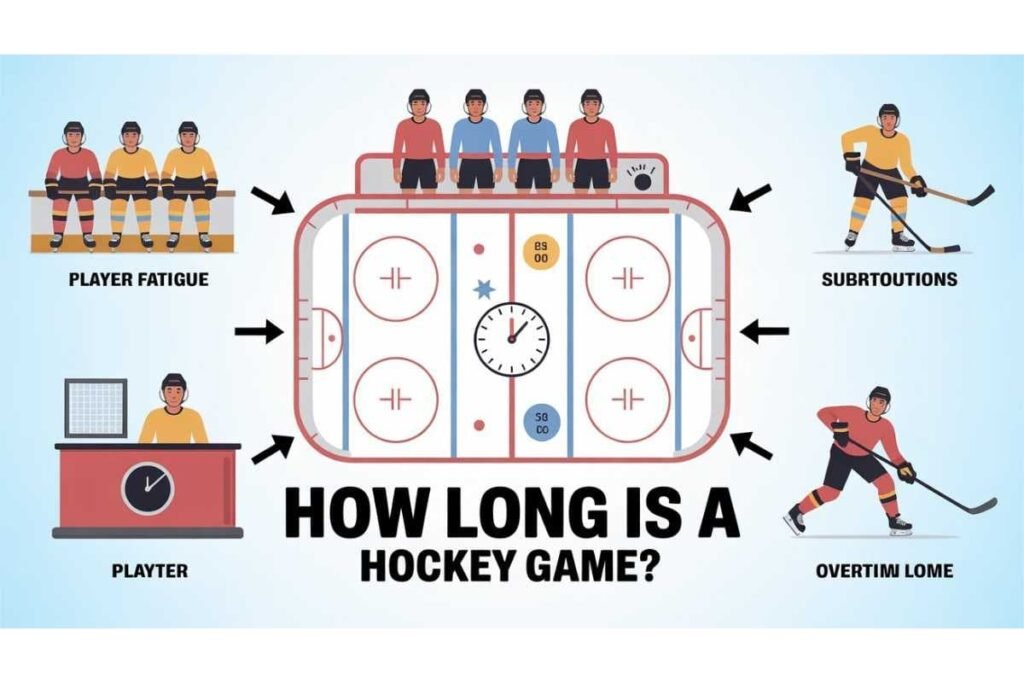
If you’ve ever wondered “how long is a hockey game?”, understanding player fatigue and game stoppages is key.Hockey is a high-intensity sport, and players expend enormous energy skating, shooting, and defending.
To maintain performance, coaches frequently rotate hockey players, which adds brief pauses and can subtly extend total game time.
Injuries or unexpected events on the ice rink also lead to unplanned stoppages. Fast-paced, energetic teams may complete periods quicker, but overall, fatigue management influences the real-world length of the match.
Penalties further impact duration: minor or major infractions stop the clock, forcing players to serve time in the penalty box while the game slows down.
During knockout rounds or playoffs, overtime periods and shootouts can dramatically increase game length, sometimes exceeding 3 hours in total.Factors like smooth ice, player rotations, and refereeing decisions all combine to determine how long the game feels to fans.
By considering these elements, viewers and players alike gain a better understanding of why the official 60-minute clock rarely reflects the full experience.
How Does the Type of Game or League and Puck Physics Influence How Long is a Hockey Game Lasts?
When asking “how long is a hockey game?”, it’s important to realize that not all hockey matches follow the same timing rules.
Official ice hockey in professional leagues like the NHL has strict periods, intermissions, and overtime regulations, while recreational leagues, youth hockey, or video games such as Left 4 Dead 2 mini-games often have shorter or variable periods.
The category of play, rink size, and local rules can all influence total game duration. Beyond league rules, puck physics plays a crucial role.The hockey puck slides differently depending on ice smoothness, friction, and temperature.
On a smooth ice surface, slap shots move faster, scoring happens more quickly, and the game feels shorter. On uneven ice or when ice absorbs water, puck movement slows, players fatigue faster, and stoppages increase, extending gameplay.
By combining the type of league with physical elements like puck behavior and ice conditions, fans and players gain a clear understanding of why the real-world length of a hockey game can vary widely from its official 60-minute clock.
Are There Any Fun Facts About Game Length and Players?
- The longest official NHL game lasted over 176 minutes of play due to multiple overtimes.
- Ice maintenance between periods involves resurfacing, which uses many gallons of water to create smooth ice.
- Certain players, like Syracuse Bulldog players, are known for stamina, reducing the number of stoppages and helping maintain steady game flow.
How Can Understanding Game Length Improve Your Hockey Experience?
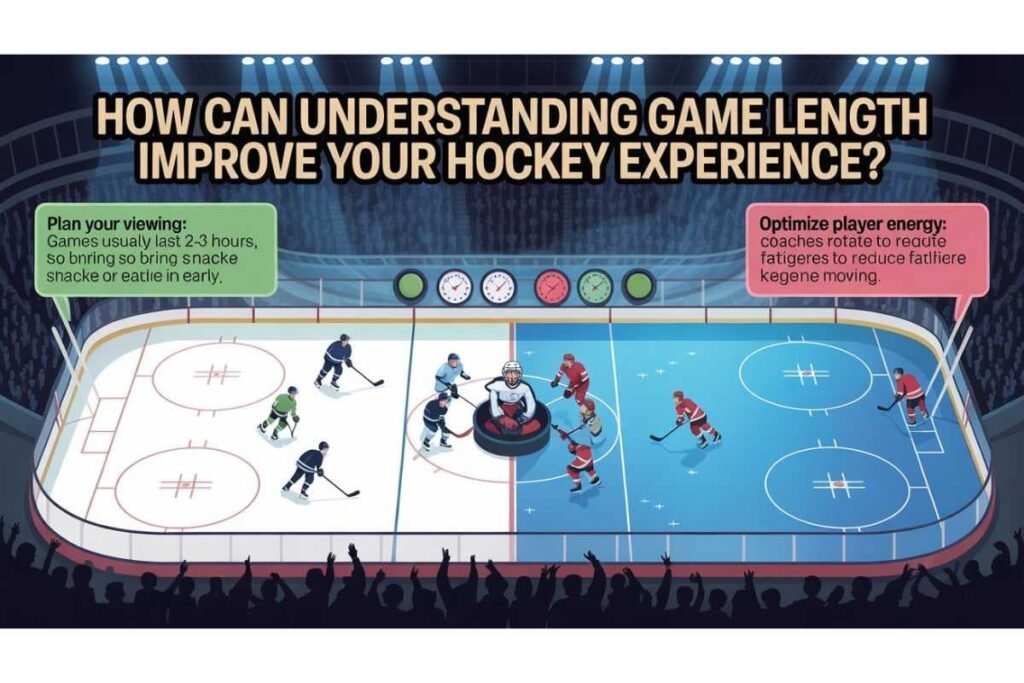
Knowing how long a hockey game lasts gives fans, players, and coaches an edge. Understanding ice conditions, player fatigue, and game dynamics helps you enjoy the match fully and plan accordingly.
- Plan Your Viewing: Games usually last 2–3 hours, so bring snacks or settle in early.
- Optimize Player Energy: Coaches rotate players to reduce fatigue and keep the game moving.
- Adjust to Ice Conditions: Ice quality and surface smoothness affect puck speed and flow.
- Strategize During Penalties and Overtime: Stoppages and overtime can make games longer.
- Enhance Training and Performance: Player fatigue, skate efficiency, and puck physics influence strategy.
Conclusion
Understanding how long a hockey game lasts goes beyond the official 60-minute clock.Real game time is influenced by multiple factors.
ice conditions, friction, player fatigue, penalties, substitutions, and overtime.Smooth ice and sharp skates speed up the game, while rough surfaces, outdoor rinks, or unexpected stoppages extend it.
Coaches use these insights to rotate players, optimize performance, and maintain fast-paced gameplay.
Fans benefit by planning their viewing experience, knowing when to expect longer or shorter matches.
Whether you’re attending a professional NHL game, local league, or even playing video-game hockey, recognizing these elements helps you enjoy the action fully while appreciating the strategy, skill, and physics behind every period.
FAQs
How long is a professional hockey game?
A standard professional game has three 20-minute periods, but real time is usually 2–2.5 hours due to stoppages.
Do penalties affect hockey game length?
Yes, minor and major penalties stop the clock, adding time and sometimes extending the game beyond 2–3 hours.
Does ice quality influence game duration?
Smooth ice allows faster puck movement, while rough or wet surfaces increase friction, slowing players and the overall game.
How does player fatigue impact hockey games?
Fatigued players slow the pace, and frequent substitutions add stoppages, extending the total game time.
Do overtime and shootouts make games longer?
Absolutely, especially in playoffs, overtime and shootouts can push total time beyond three hours.
Can ice skates affect game speed?
Yes, sharper skates let players glide efficiently, speeding up gameplay, while dull skates slow movement.
Do outdoor rinks change how long a game lasts?
Weather and surface type, like snow or concrete, increase friction and can significantly lengthen gameplay.
Does league type affect hockey game duration?
Professional leagues have strict timing, while youth, recreational, or video-game hockey often has shorter or variable periods.